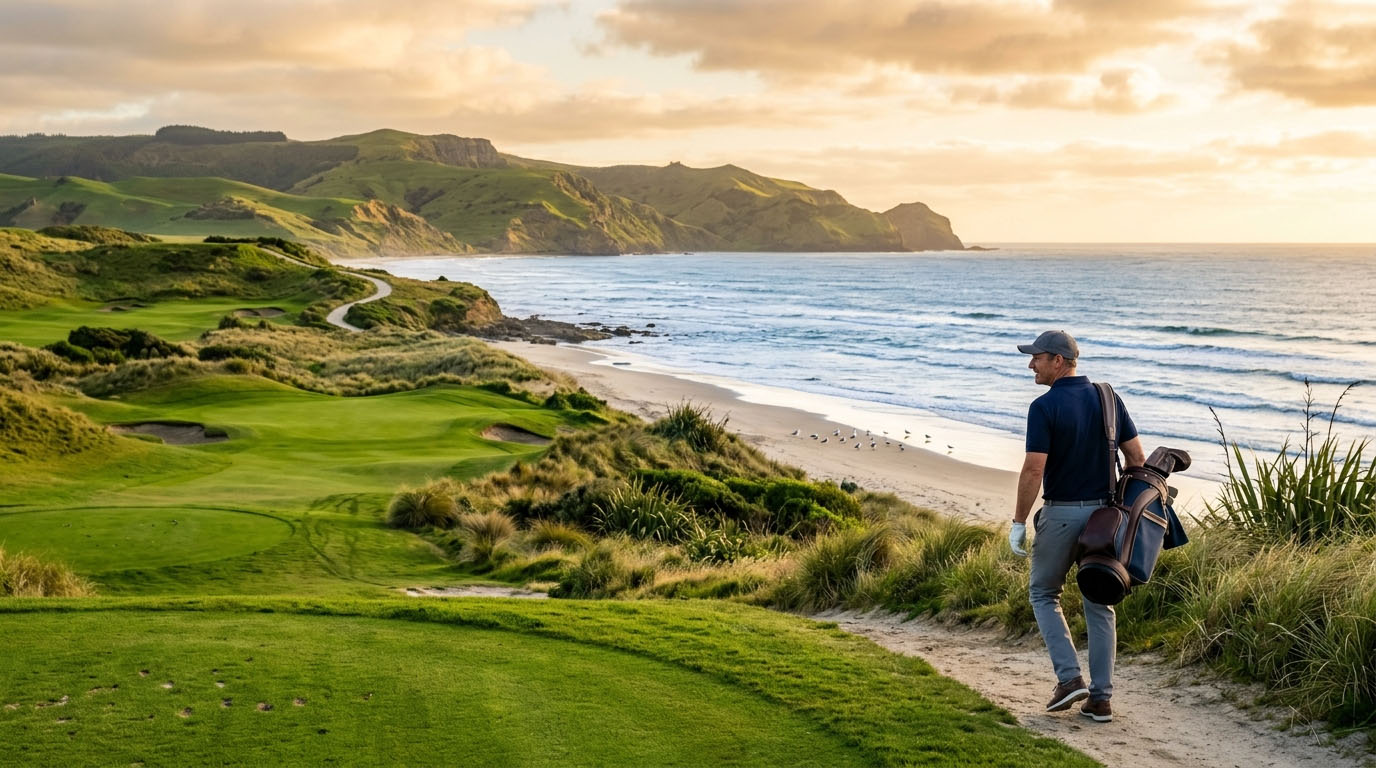
A golf trip can be built around tee times, scorecards, and the hunt for a memorable round, but the best golf holidays rarely stay inside the boundaries of the course. The hours before a morning tee off, the late afternoon after eighteen holes, and the recovery day between rounds all shape the feel of the trip. On New Zealand’s Nature Coast, that matters even more. This stretch between Kāpiti and Horowhenua gives golf travelers an easy way to mix fairways with beaches, wildlife, walking trails, local food, and quiet places to reset. The result is a getaway that feels fuller, more varied, and far more memorable than a schedule made up of golf alone.
That broader rhythm is part of what makes golf travel so rewarding. A trip built around the sport often works best when the hours away from the course support the same mood as the round itself. A calm coastal walk can settle the body before an early start. A beach swim can loosen tired legs after a long day of walking fairways. A birdwatching stop, a local market, or a spa session can turn a simple golf break into something that feels like a proper holiday. Travelers planning golf in Singapore often think in a similar way, combining practice, course time, and city leisure rather than treating golf as the only item on the itinerary. Nature Coast offers that same balance, but with a slower pace and a stronger connection to landscape.
Quick Trip Summary
- Pair golf rounds with walks, beaches, wildlife stops, and low impact activities that keep energy high.
- Use the coast’s relaxed pace to build recovery time into the trip without wasting a day.
- Mix active experiences with food, culture, and wellness for a golf holiday that feels richer than a simple course hop.
Why golf trips work better with more than just golf
Most golfers know that a trip can become tiring if every day follows the same pattern. Wake up early, rush breakfast, play eighteen holes, drive back, eat, sleep, then repeat. That can still be fun, but it often leaves little room for the destination itself. A more balanced approach gives the trip shape. It creates moments to slow down, absorb where you are, and enjoy the parts of travel that have nothing to do with your handicap. Nature Coast is particularly well suited to this because so many worthwhile experiences sit within easy reach of one another. You do not need to commit to a full day expedition to add something meaningful between rounds.
There is also a practical side to this. Golf is physical in a sneaky way. Long walks, repeated swings, concentration over several hours, and changing weather can all add up. Lighter outdoor activities can keep the trip enjoyable without placing more strain on the body. A scenic stroll or a beach afternoon may actually help you play better the next day because you are recovering instead of overloading yourself. In other words, the non-golf parts of the holiday are not just filler. They can improve the whole experience.
1. Scenic coastal walks that bookend a day on the course
One of the easiest activities to add to a golf trip is a walk. It asks very little in terms of planning, gear, or cost, yet it changes the pace of the day immediately. On the Nature Coast, coastal paths and inland tracks offer a chance to move without pressure. You are outside, you are stretching the legs, and you are seeing a side of the region that a clubhouse view cannot provide. For golfers, this is often the ideal pre or post round activity because it feels active without becoming another sporting challenge.
A morning walk can be especially useful on a travel day or before an afternoon tee time. It helps shake off stiffness from driving and gives you a feel for local weather conditions before you reach the first tee. If you prefer to save your energy for golf, a late afternoon walk works just as well. The light is softer, the pace naturally slows, and you can turn the final hours of the day into a gentle wind down rather than another rushed transition between activities.
Nature Coast has plenty of routes that fit this role. Travelers who want ideas for manageable routes can borrow from the region’s scenic walks and hikes, where coastal views, native bush, and varied terrain give you options that suit both active walkers and casual strollers. The key is not to treat the walk as a mission. Keep it short if you have golf later. Let it be part of the trip’s rhythm rather than another box to tick.
Beach time is not wasted time on a golf holiday
Golf travelers sometimes underrate the value of an unstructured beach stop because it does not feel productive in the same way as booking another activity. In reality, a few hours by the water can be one of the smartest additions to the itinerary. Beaches give you space to rest without retreating indoors. You can swim, read, nap, wander barefoot, or simply sit and watch the weather move across the coastline. That kind of downtime matters after a morning on the course, especially if you are traveling with a partner or group where not everyone wants every hour to revolve around golf.
Beach time also broadens the emotional tone of the trip. Golf can be competitive even on holiday. A beach afternoon removes that pressure. Nobody cares about score, swing path, or whether the putter behaved. It is simply a change of pace. Nature Coast’s shoreline makes that easy because many beaches feel open and uncrowded, which suits travelers looking for a calmer alternative to resort style destinations.
If you want to build this into your plans, the region’s guide to hidden beaches is useful for finding quieter spots where a golf day can gently fade into an evening by the water. It is one of the simplest ways to make the trip feel like a holiday first and a sporting mission second.
Wildlife encounters that give the trip a sense of place
One reason golf travel can blur together is that many courses, however enjoyable, still fit a familiar pattern of greens, bunkers, clubhouse, and post round drink. Wildlife experiences break that pattern. They root the trip in the destination itself. On Nature Coast, birdlife and coastal ecosystems are a major part of what makes the area distinctive, and that gives golf travelers a chance to step into a different environment without needing a full adventure itinerary.
Wildlife watching works particularly well on the day between rounds. It gets you outside and keeps the schedule active, but it does not demand the same intensity as a long hike or water sport. It also suits mixed travel groups because even people with no interest in golf can enjoy it. A visit to a birdwatching area, estuary, or protected natural site gives everyone something to share, which can be useful if the trip includes family or non-golfing friends.
There is also a mental reset involved. Golf requires concentration, patience, and close attention to small details. Wildlife watching asks for a different kind of focus. You slow down, listen, scan the landscape, and notice movement that would normally pass you by. For many travelers, that change is restorative. It pulls the mind away from the score you posted that morning and reminds you that you are on holiday in a place worth noticing.
Cycle rides for travelers who want to stay active between rounds
Not every golfer wants total rest between games. Some travelers feel better when they keep moving, provided the activity does not leave them drained. Cycling can fill that gap nicely. It gives you a sense of range and freedom, and it lets you cover more ground than a walk while still keeping the day flexible. On a scenic coast, that can be a satisfying way to move between town centers, beaches, viewpoints, and food stops without spending the entire day in the car.
The main advantage of cycling on a golf trip is that you can control the effort. A short easy ride is enough if your legs are tired. A longer route is there if you skipped golf that day and want something more active. It can also be a social activity for groups with different energy levels because people can ride at their own pace, stop for coffee, and turn the outing into half exercise, half sightseeing.
For golfers who already walk their rounds, cycling often feels like a natural fit. The body is used to steady movement rather than explosive exertion. That means you can enjoy a route without feeling as though you are sabotaging tomorrow’s tee time. Keep the ride moderate, hydrate properly, and it becomes a pleasant way to see more of the coast rather than a training session in disguise.
Wellness stops can be part of the golf plan, not an afterthought
There is a tendency to think of spa visits, hot pools, or wellness sessions as something separate from a golf holiday, almost as though they belong to a different kind of trip. In practice, they fit perfectly. Golf places repeated stress on the lower back, shoulders, hips, and feet. Even if you are not sore, a few days of walking and swinging can build fatigue in subtle ways. A wellness stop can keep that fatigue from shaping the rest of the trip.
This does not need to mean an all day retreat. It might be a massage after a morning round, a quiet afternoon at a spa, or a lighter recovery session after a travel day. What matters is the function it serves. It creates a buffer between active days. It gives your body time to settle. It also adds a sense of occasion to the holiday. A golf trip can easily become all logistics and tee sheets. Wellness time restores the leisure side of the equation.
Nature Coast already lends itself to this slower style of travel, which is why the region’s wellness options deserve a place in the itinerary rather than being left as a backup plan for bad weather. Golfers who build in one dedicated recovery block often find the entire trip feels less rushed and more enjoyable from start to finish.
Local food stops make the rounds feel connected to the destination
Every golf trip needs good food, but the best food stops are not just about convenience between activities. They are part of how you remember the place. A café breakfast before a tee time, a long lunch after a morning round, or a produce market stop on the way back from the beach all create texture around the golf itself. Nature Coast has the advantage of being a region where local food can be folded into the day naturally, without needing formal dining plans for every meal.
Food matters on a practical level too. If you are walking courses, spending long hours outdoors, and adding other activities like beach time or cycling, you need to eat properly to keep the trip comfortable. A good lunch stop can reset the day. A market visit can stock your accommodation with fruit, snacks, and simple dinner ingredients. These details sound small, but they often determine whether a golf trip feels smooth or oddly exhausting.
It also helps that local food breaks create social time. Golf groups often scatter after a round, with some people heading to practice areas and others back to the room. A shared meal pulls everyone together again. It is where stories from the day get told, plans shift, and the trip develops a personality of its own.
A smart mix of low energy and higher energy activities
One of the best ways to plan a golf centered holiday is to vary the intensity of what you do around the rounds. Nature Coast makes that easy because the region supports both gentle and more active outdoor options. The trick is not to stack demanding experiences back to back. If you play golf in the morning and take on a strenuous afternoon activity, you may end up too tired to enjoy either properly. A more balanced structure tends to work better.
| Activity type | Best time to do it | Why it suits golf travelers |
|---|---|---|
| Scenic walk | Morning before a late tee time or after a round | Keeps the body loose without adding too much fatigue |
| Beach stop | After golf or on a lighter day | Adds recovery time while still keeping you outdoors |
| Wildlife watching | Between rounds or on a non golf morning | Offers a slower pace and a strong sense of place |
| Cycling | Non golf day or short afternoon outing | Lets active travelers keep moving without needing a full day plan |
| Spa or wellness stop | After a demanding round or travel day | Supports recovery and makes the trip feel more restorative |
Simple outdoor ideas that fit neatly around tee times
Not every activity needs to dominate the day. Some of the most enjoyable additions are the ones that take an hour or two and slot around golf without stress. If you are trying to build a trip that feels full but not overplanned, these are often the smartest choices.
- Sunrise beach walks
Perfect for early risers who want fresh air before breakfast and a calm start before heading to the course. - Short estuary birdwatching stops
A good fit for the afternoon when energy is lower but you still want to be outside and engaged with the landscape. - Picnic lunches after nine or eighteen holes
Better than rushing straight into the car, and a nice way to stretch the day into something more relaxed. - An easy cycle ride through town or along the coast
Useful on the day after a round if you want movement without committing to a long hike. - Sunset viewing at the beach
A simple, low effort finish to the day that turns an ordinary evening into a memorable one.
How to plan the trip without overloading it
The temptation on a golf holiday is to fit in too much. There is always one more course, one more lookout, one more restaurant, one more stop you feel you should make because you traveled all this way. The better approach is to decide what kind of trip you want before you fill the schedule. If golf is the clear priority, use outdoor activities as support acts. Keep them restorative, scenic, and easy to abandon if weather or energy changes. If the trip is shared with non golfers, build the itinerary around mixed experiences first, then place the golf rounds where they make sense.
A practical rule is to avoid scheduling two demanding outdoor blocks on the same day as a full round. If you have an early tee time, choose one lighter activity later, such as a beach visit or short walk. If you have a rest day from golf, that is the time for a longer hike, a cycling route, or a wildlife outing that takes more hours. This keeps the holiday from becoming a blur of rushed transitions and helps you stay present in each part of it.
It is also worth checking seasonal conditions before you travel. Nature Coast’s outdoor appeal is closely tied to weather, daylight, and local conditions, and those factors shape what feels enjoyable on any given day. For broader guidance on outdoor recreation planning and responsible travel in natural settings, the New Zealand Department of Conservation is a useful source for track advice, access notes, and safety information. A little planning goes a long way, especially if you are trying to balance golf bookings with time in the landscape.
Making the most of the hours between rounds
The real charm of a golf trip often lives in the hours that are not spent playing. It is the coffee before the round when the day still feels open. It is the quiet beach after lunch, the slow walk in the evening, the bird call you hear on a trail the morning after a good score, and the shared meal where the group starts talking about everything except golf. Nature Coast is well suited to that kind of travel because it does not force you to choose between sport and scenery. You can have both, and they improve each other when the trip is paced well.
For golf travelers, that is the bigger lesson. A memorable golf holiday is not just a list of courses played. It is the atmosphere built around those rounds. It is how the destination enters the trip and gives it character. On Nature Coast, outdoor activities do exactly that. They add recovery, variety, and a stronger connection to the place itself. Play your golf, absolutely, but leave room for the coast to shape the rest of the story.